For people working, studying, or living across the San Francisco Bay Area, finding the right American Heart Association course can be complicated by the range of options available. A nurse may need BLS, a healthcare professional may need ACLS or PALS, while a teacher, caregiver, or workplace employee may be looking for CPR, AED, or First Aid training.
The American Heart Association Self-Guided Learning format addresses a different part of that decision: how the training is delivered. It allows learners to complete the cognitive portion independently and then complete the applicable hands-on skills portion at an approved verification station. The American Heart Association describes this format as an option for learners who want greater flexibility and a self-paced experience.
That makes Self-Guided Learning different from an online-only course. For applicable AHA courses, hands-on skills practice and verification remain part of the process.
Key Takeaway
AHA Self-Guided Learning is a flexible training format that combines independent online education with the required practical skills component. Bay Area learners should first identify whether they need BLS, ACLS, PALS, CPR/AED, or First Aid and then confirm that the selected course and format satisfy their employer’s, school’s, or organization’s requirements.
What Does AHA Self-Guided Learning Mean?
Self-Guided Learning separates much of the cognitive learning from the practical skills portion. Instead of spending the entire training experience in a scheduled classroom, the learner works through the educational material independently and then completes the applicable hands-on portion at an approved verification station.
The AHA specifically describes Self-Guided Learning for BLS, ACLS, and PALS as combining self-paced online learning with a self-guided skills session at a CPR Verification Station. These stations provide equipment with real-time feedback to help learners verify their skills.
The process generally follows this pattern:
- Identify the course required for your role.
- Complete the cognitive portion independently.
- Attend the applicable hands-on skills session.
- Practice and demonstrate the required skills.
- Complete the course requirements and receive the applicable course completion documentation.
The exact process depends on the course. BLS, ACLS, PALS, and Heartsaver programs have different audiences and requirements, so learners should review the specific course rather than assuming every AHA program follows precisely the same path.
BLS Self-Guided Learning for Bay Area Healthcare Professionals
Basic Life Support (BLS) is generally intended for healthcare professionals and appropriate healthcare students. Nurses, nursing students, physicians, EMTs, paramedics, medical assistants, dental professionals, and other healthcare personnel may need BLS depending on their roles and organizational requirements.
BLS is different from a general public CPR course because it is designed around healthcare-provider responsibilities. The AHA’s current BLS Self-Guided Learning option combines online cognitive education with hands-on skills practice and verification through an approved CPR Verification Station.
This format may appeal to a Bay Area nursing student balancing clinical work with coursework or a healthcare employee whose schedule changes from week to week.
People searching for BLS classes in the SF Bay Area can begin by reviewing San Francisco CPR and BLS training options and then comparing the course requirements with what their employer or school has requested.
ACLS Training and Self-Guided Learning
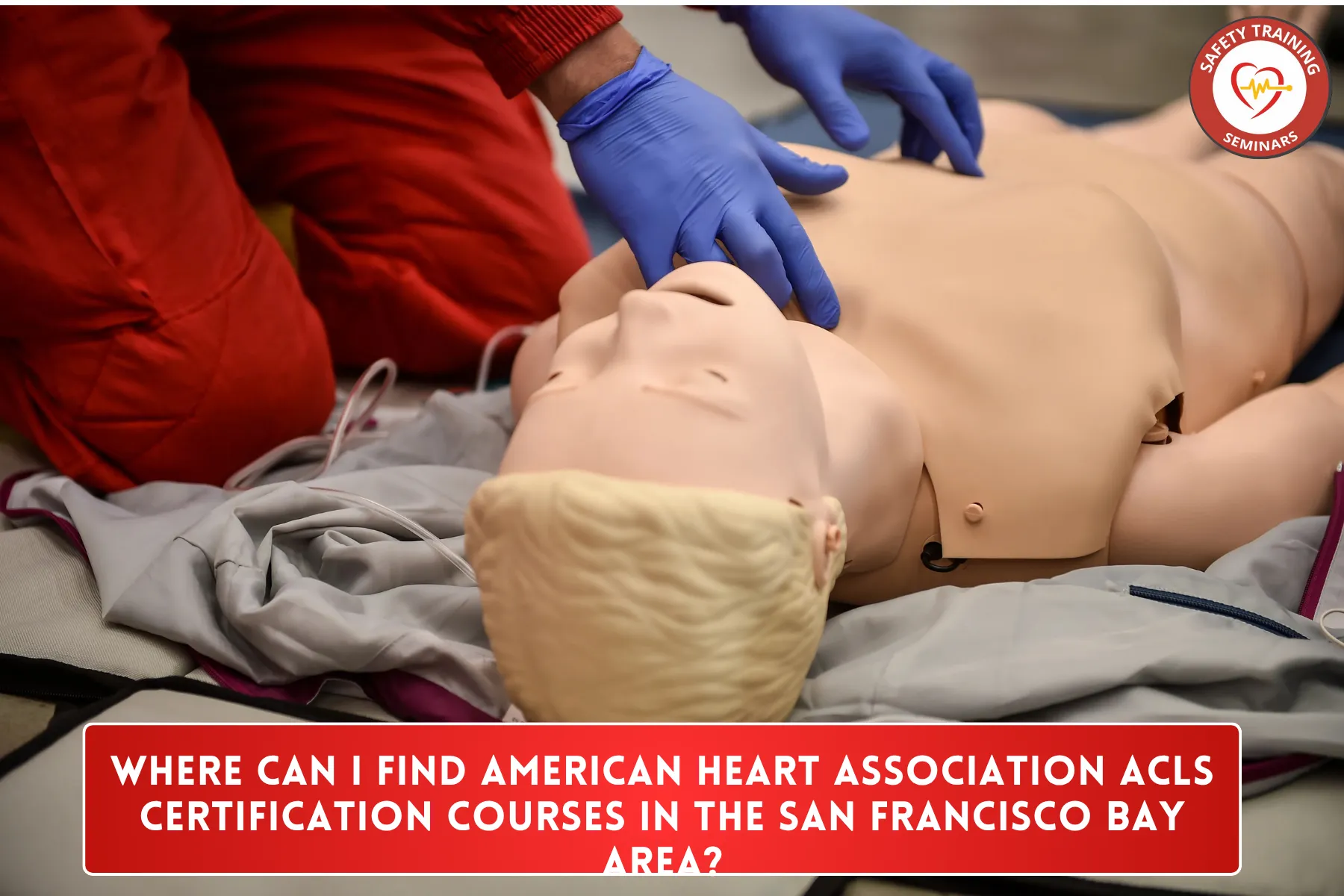
Advanced Cardiovascular Life Support (ACLS) is intended for healthcare professionals involved in managing adult cardiovascular emergencies. It is not simply a higher-level version of a general CPR course.
For eligible learners, AHA Self-Guided Learning provides an ACLS pathway that combines independent cognitive learning with the applicable hands-on skills portion. The AHA’s HeartCode Complete ACLS format uses a CPR Verification Station for hands-on practice and testing.
This can be relevant for physicians, nurses, paramedics, and other healthcare professionals whose roles include adult cardiovascular emergency care.
However, working in healthcare does not automatically mean ACLS is required. The appropriate course depends on the individual’s position and the requirements established by the employer, healthcare organization, school, or other relevant authority.
It is also important to distinguish ACLS from BLS. The AHA states that BLS is not included in ACLS, so learners should verify whether they separately need a current BLS course.
PALS Self-Guided Learning in the Bay Area
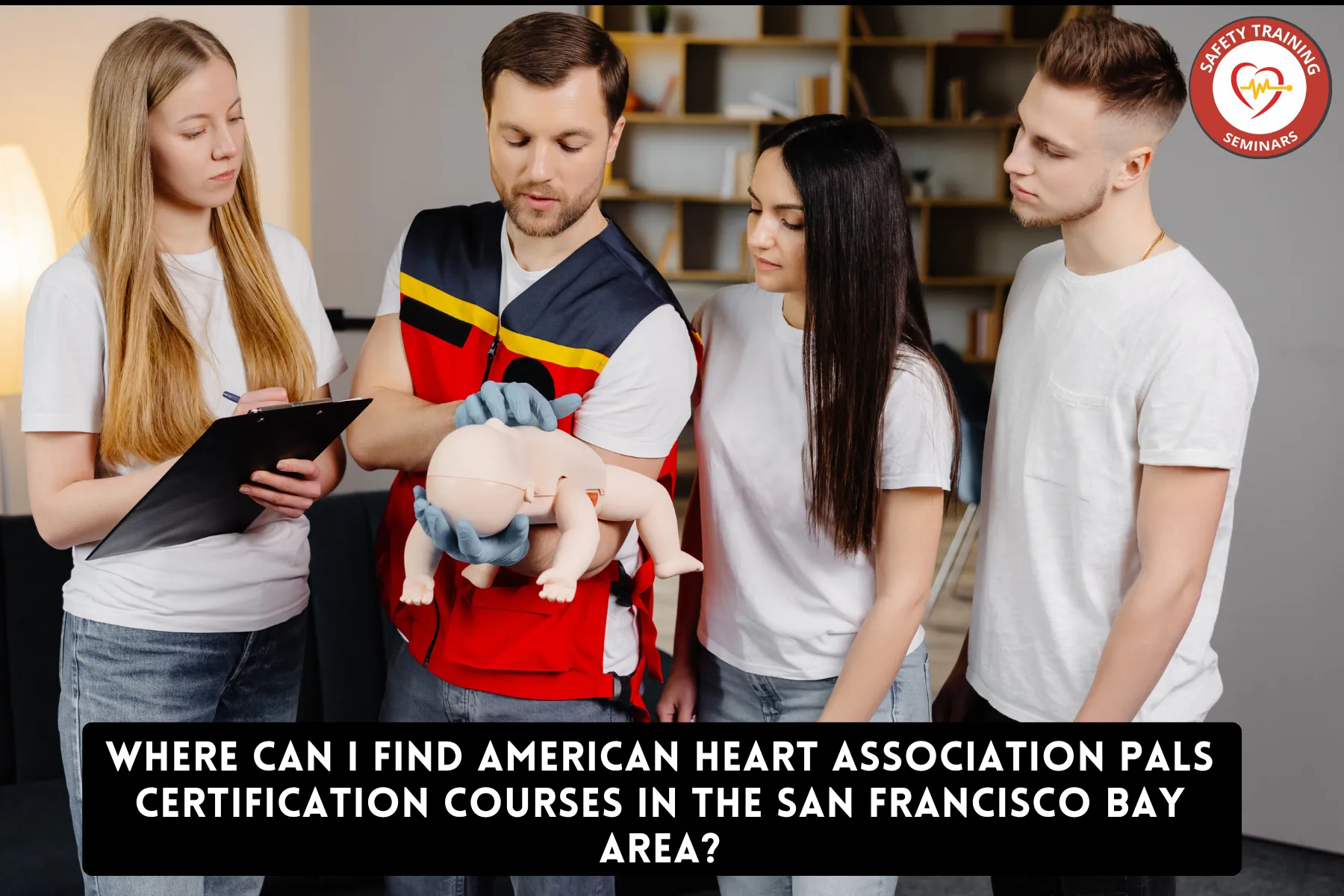
Pediatric Advanced Life Support (PALS) is focused on pediatric emergency care and is intended for appropriate healthcare professionals who may respond to emergencies involving infants and children.
A healthcare professional working with pediatric patients may need PALS rather than ACLS, depending on the requirements of the position. The AHA’s PALS Self-Guided Learning format combines online education with a hands-on skills session and testing at an approved CPR Verification Station.
For someone researching PALS classes in the SF Bay Area, the most useful first step is to identify the requirement from the employer, clinical program, or healthcare organization. This prevents choosing a course based solely on a general assumption about which certification is appropriate.
CPR, AED and First Aid Self-Guided Training
The Bay Area training audience extends well beyond healthcare. Teachers, childcare providers, fitness professionals, coaches, workplace employees, parents, caregivers, and other community members may need CPR, AED, or First Aid training.
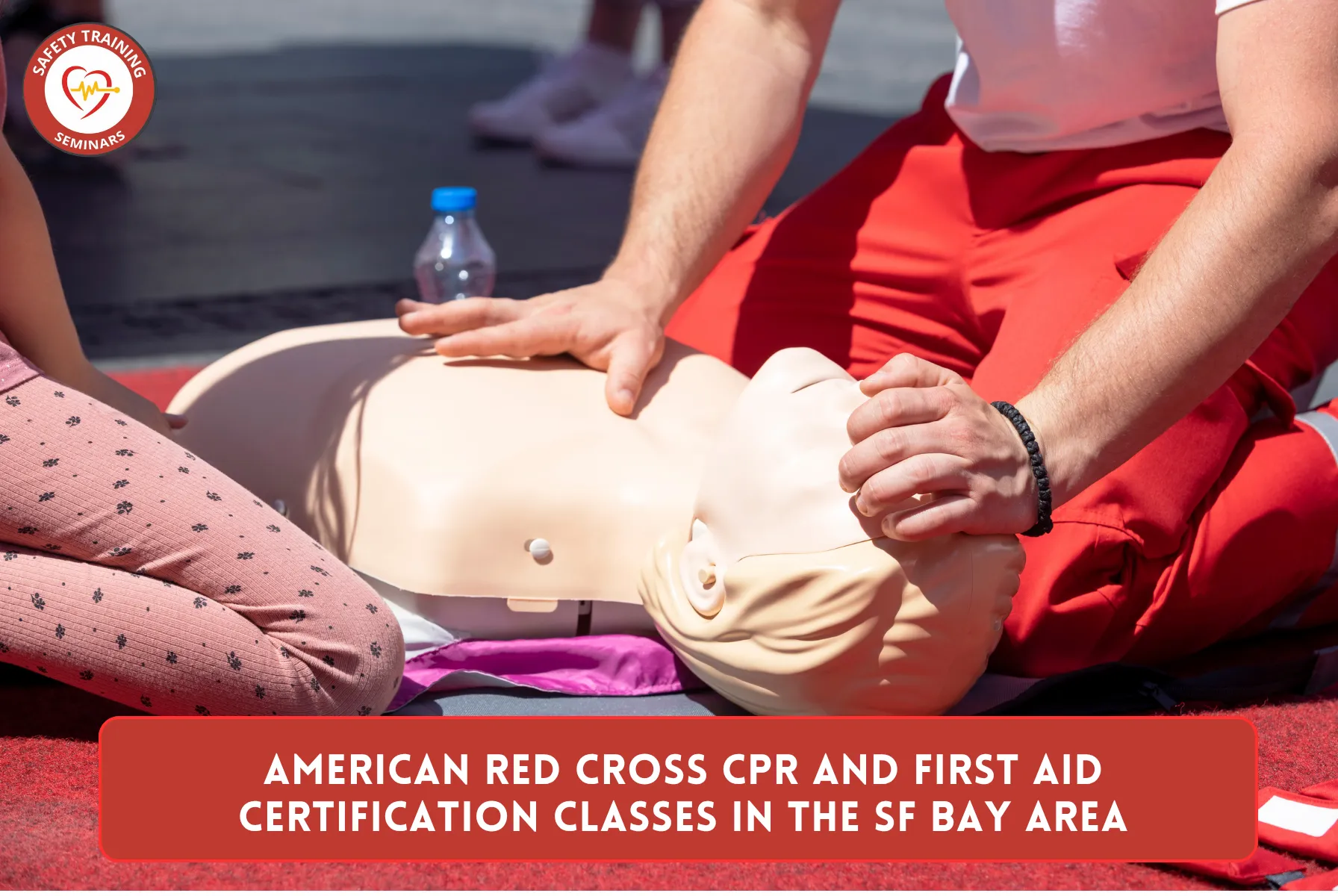
The AHA’s Heartsaver portfolio is designed for people with little or no medical training who need First Aid, CPR, and AED training for work or other requirements, as well as people who simply want these skills. The AHA offers flexible delivery options, including Self-Guided Learning.
For Heartsaver First Aid CPR AED Self-Guided Learning, the learner completes self-paced online education followed by in-person hands-on practice and a skills session using an AHA-approved training simulation station.
That makes course selection important. A workplace employee may need a Heartsaver course, while a nurse may need BLS. The fact that both courses include CPR does not make them interchangeable.
Which AHA Course Should You Choose?
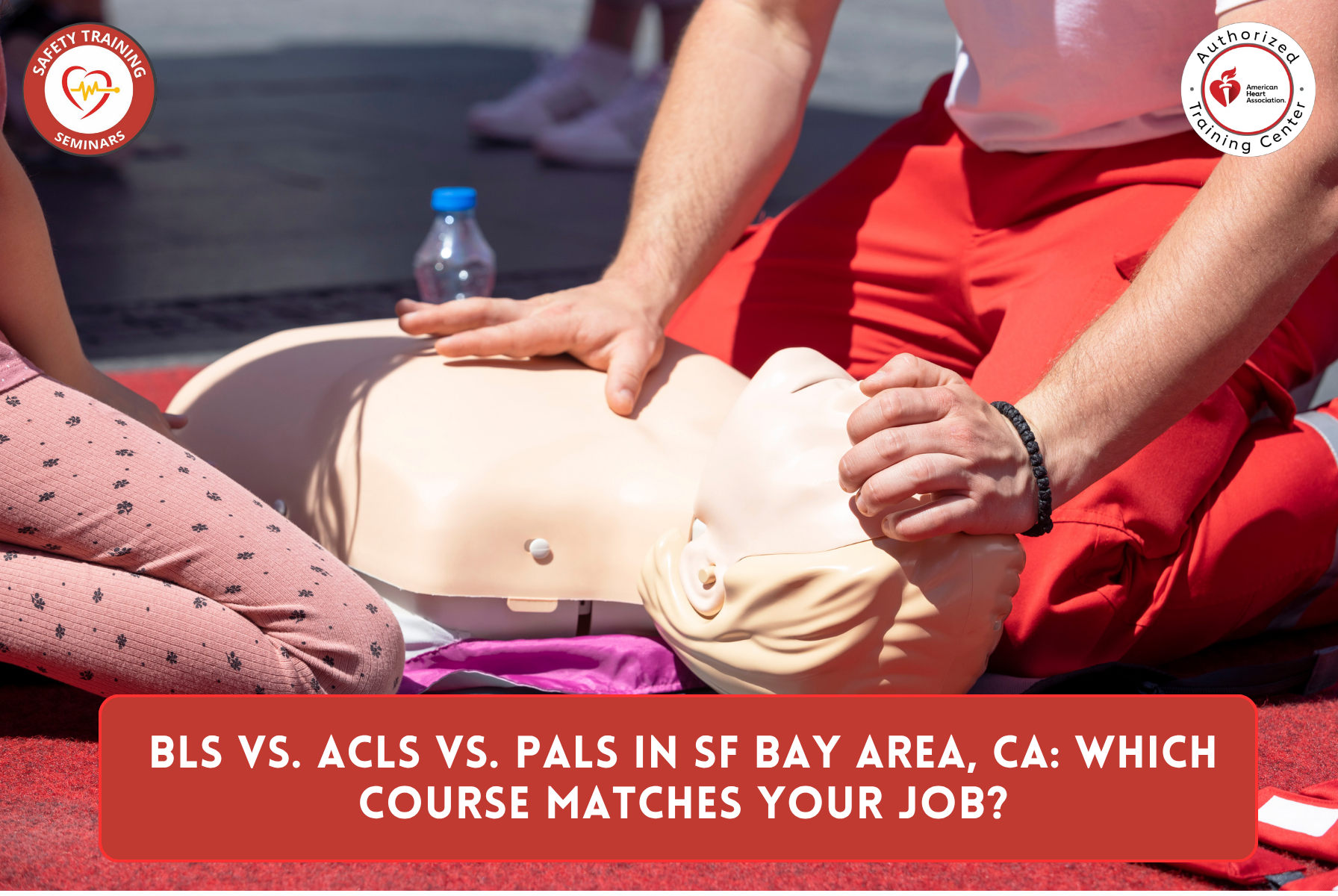
A simple comparison can help:
| Course | Typical audience |
| BLS | Healthcare professionals and appropriate healthcare students |
| ACLS | Healthcare professionals involved in adult cardiovascular emergency care |
| PALS | Healthcare professionals involved in pediatric emergency care |
| CPR/AED | General public and workplace audiences |
| First Aid | Workplace, education, childcare, community, and general audiences |
These are typical audience categories, not universal employment rules. An employer, school, healthcare organization, licensing body, or training program may specify a particular course.
Before purchasing or registering, ask the organization requesting your training exactly which AHA course it requires. This is particularly helpful when deciding between BLS and CPR/AED or between ACLS and PALS.
Self-Guided Learning vs. Classroom vs. Online-Only
The differences become clearer when the formats are compared.
Self-Guided Learning
Self-Guided Learning gives the learner more control over the cognitive portion of training. The online material can be completed independently, followed by the applicable hands-on skills session at an approved verification station. The AHA specifically positions this format for learners and employers who need greater scheduling flexibility.
Traditional Classroom Training
Instructor-led classroom training keeps the cognitive and practical experience together in a scheduled setting. An AHA Instructor administers the cognitive portion and conducts hands-on skills practice and testing.
This approach may suit learners who prefer direct interaction, demonstrations, and instructor feedback throughout the training.
Online-Only Training
An online-only program does not necessarily include the hands-on skills component associated with an AHA course. Therefore, someone should not assume that completing an online course alone satisfies a requirement for a course that includes practical skills verification.
Self-Guided Learning is therefore its own format rather than another name for online-only CPR training.
Why Flexible Training Matters Across the SF Bay Area
The Bay Area includes healthcare workers, students, educators, corporate employees, caregivers, and professionals who may travel between communities for work and school. A fixed classroom schedule may not fit everyone.
A nursing student, for example, may be balancing lectures with clinical rotations. A healthcare professional may work rotating shifts. A workplace manager may need to coordinate training around employees working different schedules. A teacher or childcare provider may need to fit training around established work responsibilities.
For these learners, the ability to complete the cognitive portion independently can be useful. The practical component still needs to be addressed where required, but the overall structure gives learners more control over when they complete the educational material.
The flexibility does not make Self-Guided Learning universally better than classroom instruction. Someone who prefers continuous instructor interaction may find traditional training more suitable.
Safety Training Seminars in the San Francisco Bay Area
For Bay Area learners researching a local option, Safety Training Seminars provides a San Francisco training location where people can investigate CPR and BLS-related training options. The training center address is 350 Townsend St, Suite 426, San Francisco, CA 94107.
Before registering, compare the available course information with the requirement given by your employer, school, healthcare organization, or training program.
For broader course discovery, learners can also review CPR, BLS, ACLS, and PALS training resources for the Bay Area. The appropriate option should be determined by the learner’s actual training requirement rather than by the course title alone.
Why Consider Safety Training Seminars for CPR and BLS Training?
A local training option can give learners a practical starting point when they need to determine which course and delivery format fit their situation.
Safety Training Seminars can be considered by Bay Area learners researching CPR and BLS options, particularly those who need to compare a healthcare-focused BLS course with public-facing CPR/AED or First Aid training.
Before enrolling, consider:
- What exact course was requested?
- Is the course intended for healthcare professionals or general audiences?
- Does the format include the required hands-on component?
- What course completion documentation is provided?
- Does the course match the requirements of my employer or school?
These questions can help prevent enrolling in a course that does not match the requirement.
What to Check Before Enrolling
Start with the requirement, not the course name that happens to appear in a search.
If a nursing program requests BLS, verify that the selected course is the appropriate BLS option. If a healthcare employer requires ACLS, confirm whether BLS must also be current. If a workplace asks for CPR and First Aid, determine whether a Heartsaver course is the appropriate choice.
Next, compare the available delivery formats. Self-Guided Learning may work well for someone who values schedule flexibility, while classroom instruction may be preferable for someone who wants continuous instructor interaction.
Finally, confirm the hands-on portion and completion requirements before enrolling. Requirements can vary between employers, schools, healthcare organizations, and professions.
Frequently Asked Questions
Is AHA Self-Guided Learning the same as online-only CPR training?
No. AHA Self-Guided Learning combines independent cognitive learning with an applicable hands-on skills component. For BLS, ACLS, and PALS, the AHA describes the practical portion as being completed at an approved CPR Verification Station.
Can Bay Area healthcare professionals complete BLS through Self-Guided Learning?
Yes, an AHA BLS Self-Guided Learning option is available. The format combines online cognitive learning with hands-on skills practice and verification. Healthcare professionals and students should still confirm that the specific course meets the requirement of their employer, school, or clinical program.
Is ACLS appropriate for every nurse or healthcare worker?
No. ACLS is intended for healthcare professionals involved in adult cardiovascular emergency care. Whether a particular nurse or healthcare worker needs ACLS depends on the responsibilities of the position and the organization’s requirements.
What should a Bay Area workplace employee take: BLS or CPR/AED?
The answer depends on the job requirement. BLS is generally intended for healthcare professionals and appropriate healthcare students, while Heartsaver CPR/AED and First Aid courses are designed for broader workplace and general audiences. Ask the employer which AHA course is required before registering.
Does PALS Self-Guided Learning include a practical component?
Yes. The AHA’s PALS Self-Guided Learning format includes independent cognitive learning followed by hands-on skills practice and testing through an approved CPR Verification Station. This is why PALS Self-Guided Learning should not be treated as an online-only program.
Conclusion
American Heart Association Self-Guided Learning gives Bay Area learners a way to complete the cognitive portion of applicable training independently while still addressing the required hands-on skills component. That distinction is important: Self-Guided Learning offers flexibility, but it is not simply an online-only CPR course.
The right choice depends on the learner’s role. Healthcare professionals and appropriate students may need BLS, ACLS, or PALS, while teachers, workplace employees, caregivers, and other non-healthcare learners may need CPR/AED or First Aid training.
Before registering, confirm the exact course and format required by your employer, school, or organization. Then review the available local options from Safety Training Seminars and choose the training pathway that matches your professional needs, practical requirements, and schedule.