There are people of all ages in the San Francisco Bay Area in a single week of clinical work. There will be a baby in a women’s hospital, a toddler in a pediatric emergency room, a trauma patient in the city’s only Level I trauma center, and an older person in a skilled nursing unit. Basic Life Support (BLS) is the only course that nurses need to take to get ready for all of them. Not as many professionals in the Bay Area who want to renew their BLS certification are sure about something more useful: which AHA course format works best for them, whether they should take a renewal course or a full course, and what their employer or school will accept.
This guide answers those questions, starting with what BLS actually trains you to do.
Basic Life Support in Plain Terms
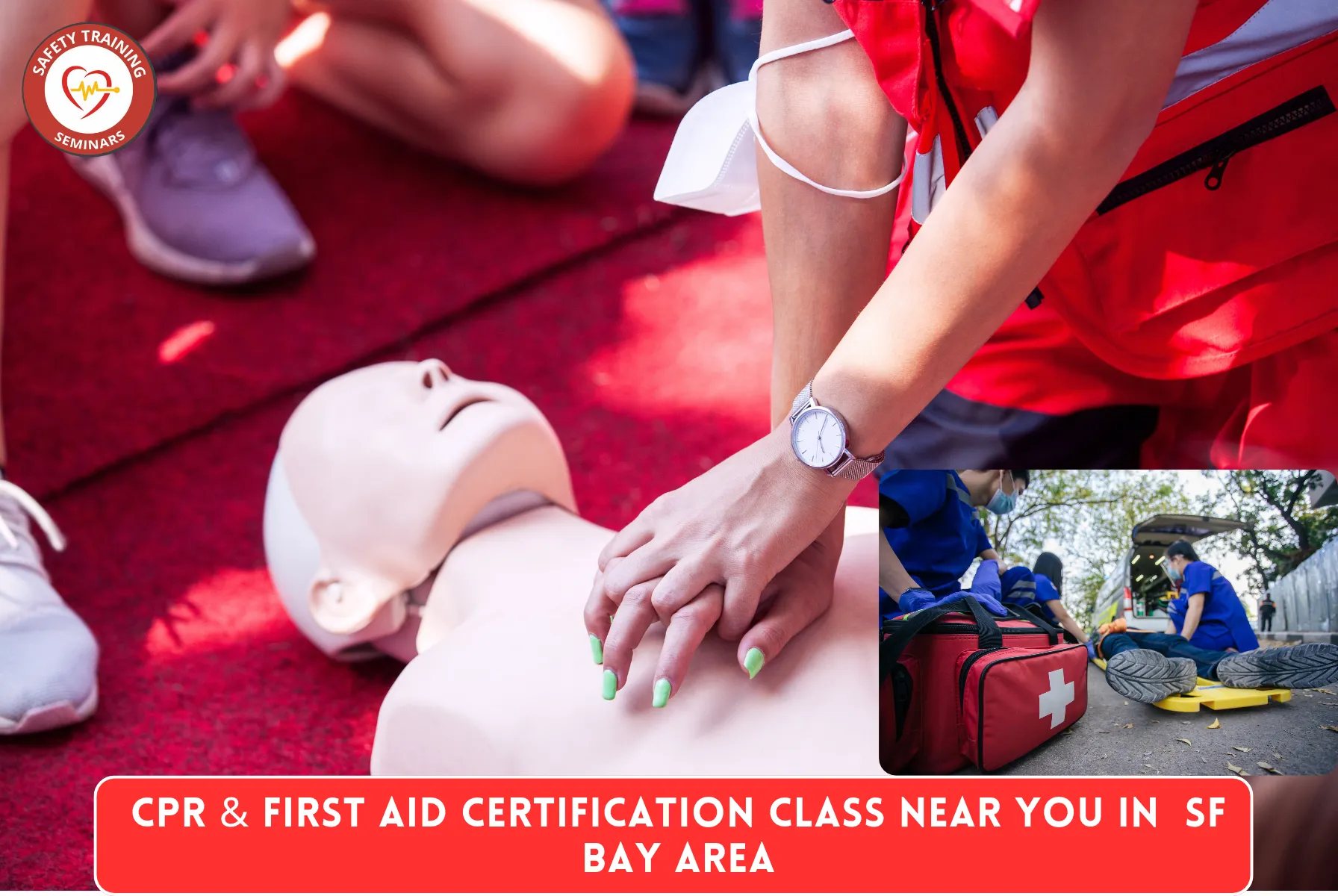
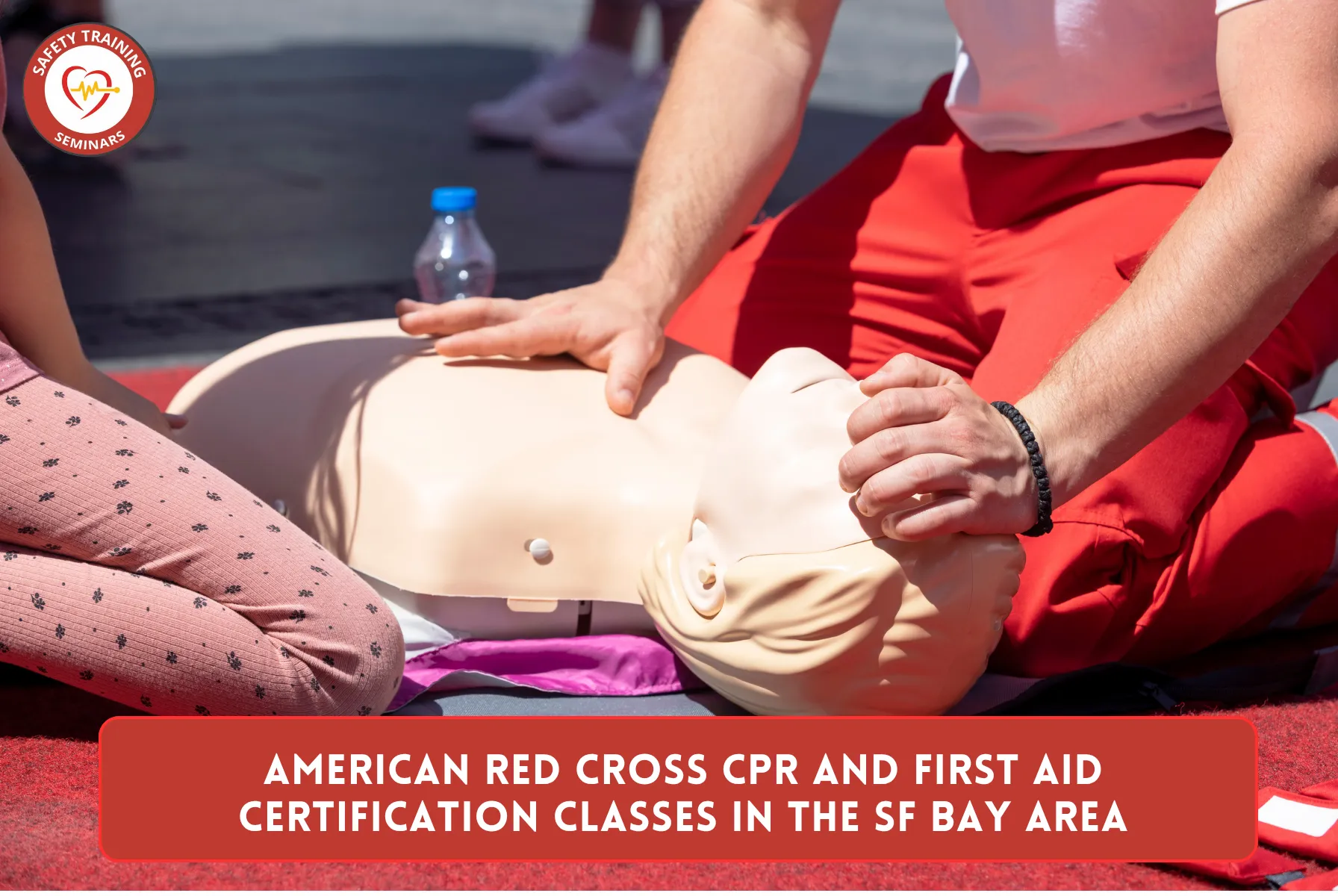
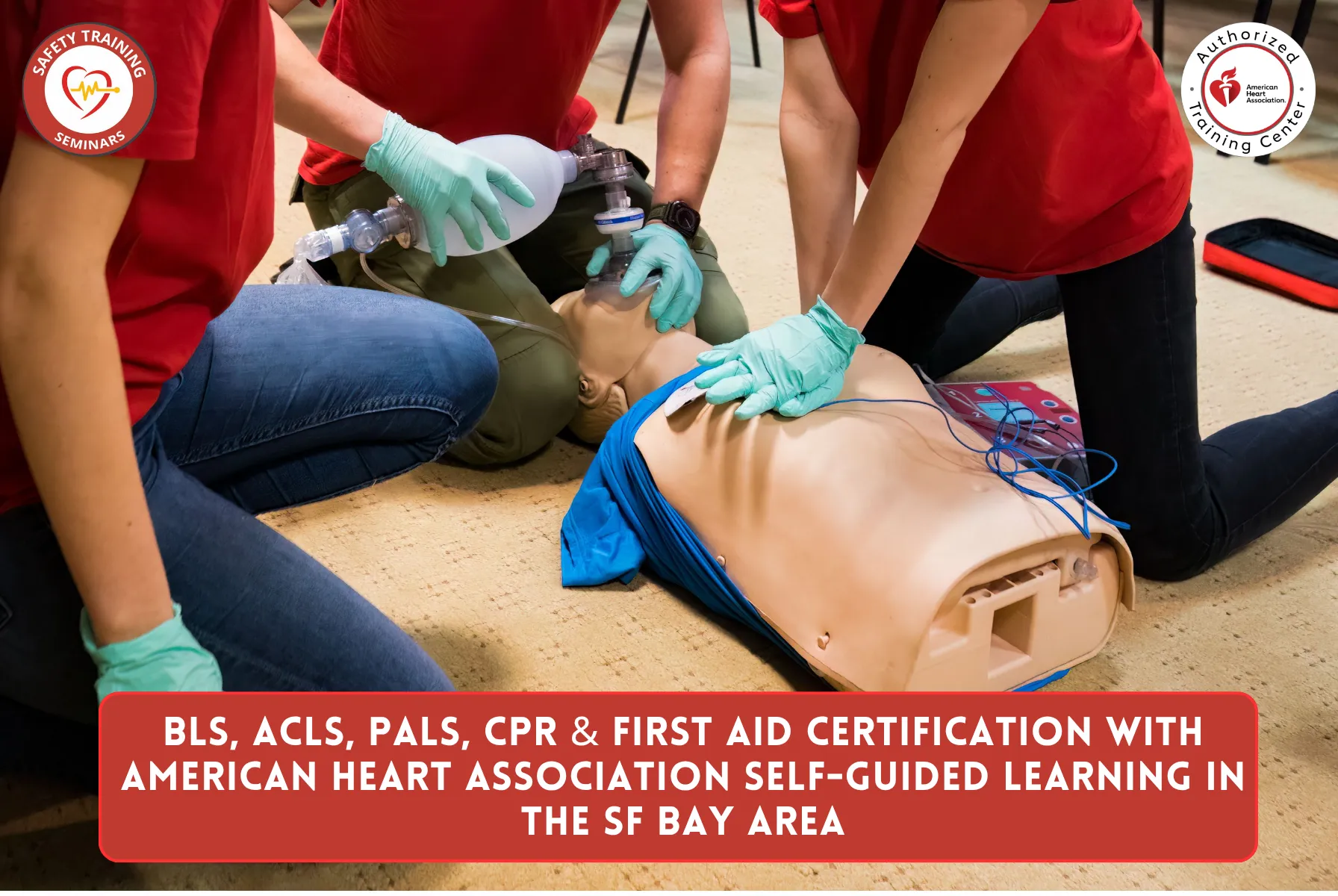
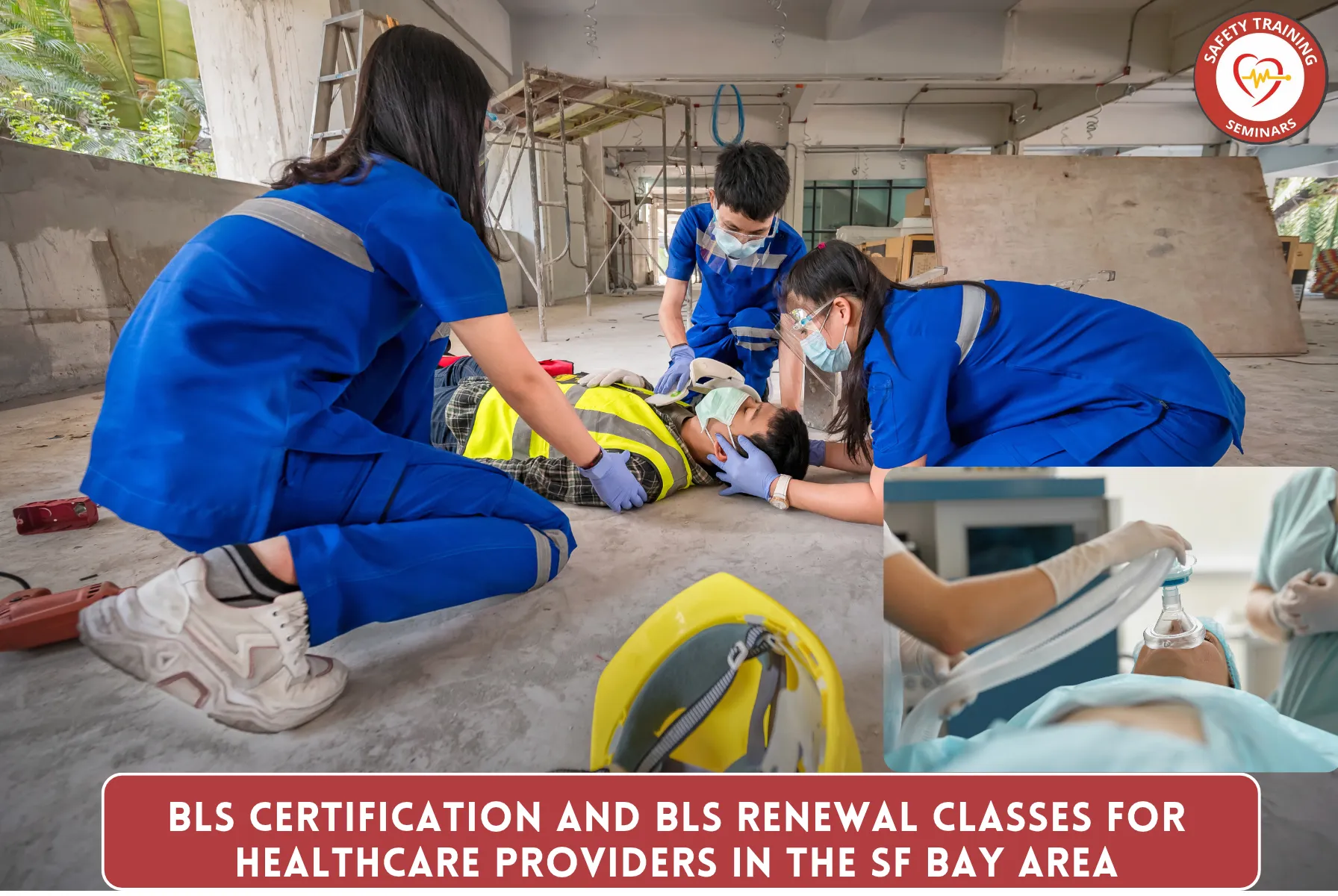
Basic Life Support is the American Heart Association’s resuscitation course for healthcare professionals. After completing it, learners should be able to recognize when someone needs CPR, perform high-quality CPR for adults, children, and infants, use an AED early, deliver effective breaths with a barrier device or bag-mask device, relieve choking, and function as an effective member of a multi-rescuer team.
BLS differs from community CPR courses in its audience and depth. A community course prepares lay rescuers to act alone until help arrives. BLS assumes the learner works in a clinical setting, may have resuscitation equipment nearby, and will often coordinate with other responders. That is why BLS spends time on two-rescuer CPR, bag-mask ventilation, rotating compressors, and team communication.
BLS is not the right course for everyone. A daycare worker, fitness instructor, or office safety volunteer may be better served by a community CPR course. Course selection should follow your job duties, your employer’s policy, and any program requirements, and the AHA recommends confirming with your employer that you are choosing the correct course.
Adults, Children, and Infants: Why the Full Age Range Matters Here
Because there are so many hospitals in the Bay Area, the parts of BLS that are based on age are very useful.
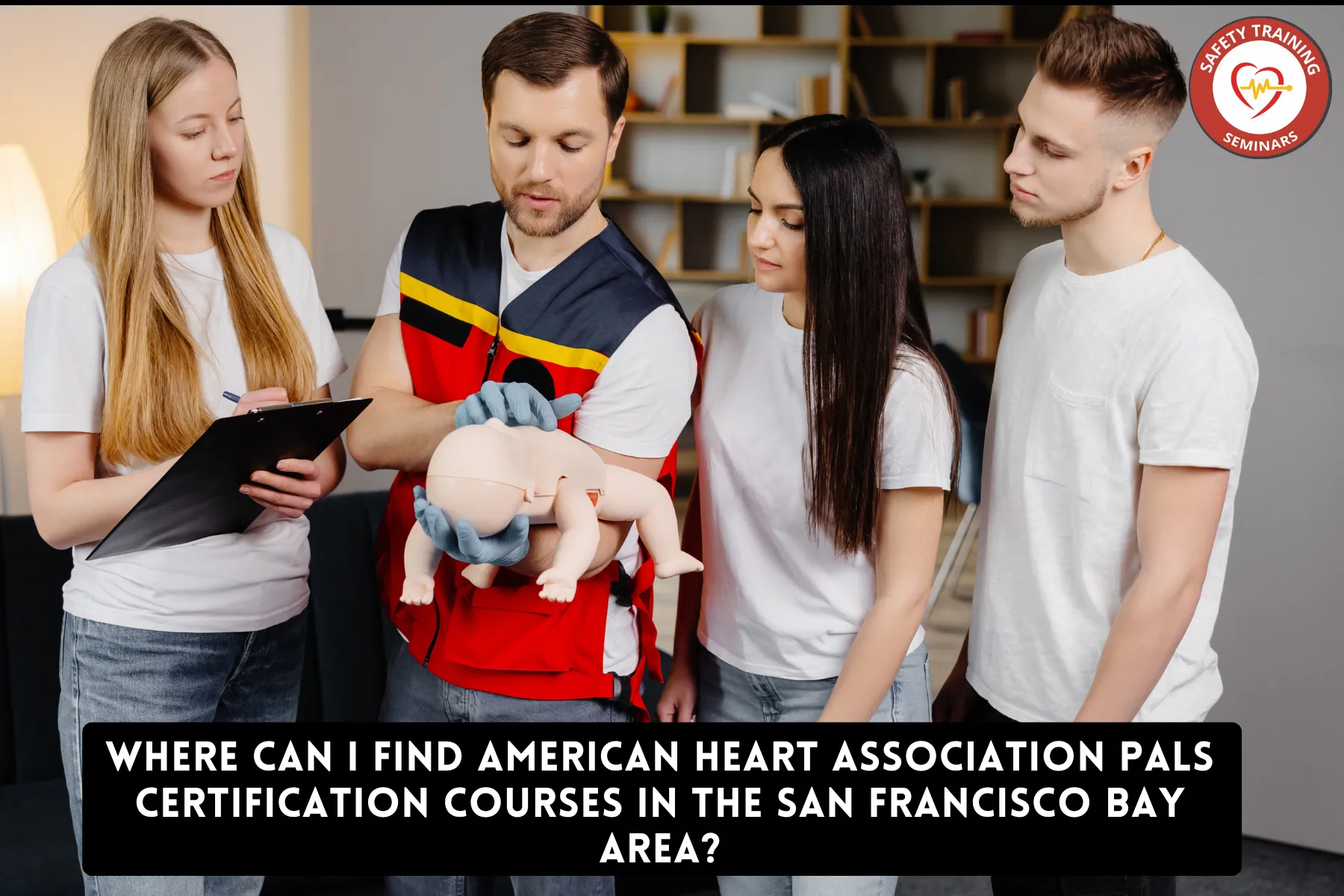
There are three hospitals at UCSF Medical Center at Mission Bay. The UCSF Benioff Children’s Hospital San Francisco is the only children’s hospital in the city. The other two are the UCSF Betty Irene Moore Women’s Hospital and the UCSF Bakar Cancer Hospital. The child and infant parts of BLS, such as two-rescuer infant CPR and infant choking relief, are just as important to nurses, respiratory therapists, and clinical staff in pediatric and maternity settings as the adult parts.
This is the only Level I trauma center in San Francisco and northern San Mateo County. It is across town at Zuckerberg San Francisco General Hospital and Trauma Center. In those places, emergency and trauma teams work in high-acuity, mixed resuscitations. The most important things that they do are early defibrillation and continuous high-quality compressions.
Aside from hospitals, the area’s outpatient clinics, dental offices, urgent care centers, and skilled nursing facilities have thousands of medical assistants, dentists, and nurses who may be the first trained people to arrive at the scene of an accident. For them, BLS means quickly recognizing an emergency, starting CPR right away, and handing off the patient to emergency medical services in a clean way.
For this reason, the AHA focuses on all three age groups in one course. This is because healthcare providers may work in different settings or even within the same health system.
Three Ways the AHA Delivers BLS
All AHA BLS course options teach the same science-based skills and lead to the same AHA BLS course completion eCard. What changes is how you learn.
Classroom course
In the classroom format, students spend the entire course with an AHA Instructor, who delivers the cognitive content and runs hands-on skills practice and testing. This option suits learners who prefer guided group practice from start to finish.
Blended learning with HeartCode® BLS
HeartCode BLS is the online portion of the AHA’s blended learning course. Students work through adaptive eLearning at their own pace, then attend a hands-on skills session to practice and demonstrate CPR and AED competence. For professionals working rotating shifts, blended learning often makes it easier to fit training around a schedule.
Self-Guided Learning™
The AHA also describes Self-Guided Learning, in which students complete the cognitive portion online and then finish hands-on skills at an approved CPR Verification Station™.
Not every format is offered at every training center, and no format skips hands-on skills. Before you register, confirm which formats your training provider offers and whether your employer or program accepts them.
BLS Certification Renewal or a First Course?
The AHA lists the BLS Provider course completion eCard as valid for two years, through the end of the month in which it was issued. For renewal options and eligibility, the AHA directs learners to their Training Center, so policies can vary.
A practical way to decide:
- Find your current eCard and note its recommended renewal date.
- If your card is current and you use BLS skills regularly, ask your training provider whether a renewal course or the standard course is the right fit.
- If your card has lapsed, or you have never taken an AHA BLS course, plan on an initial BLS Provider course unless the training provider confirms otherwise.
- Check with your employer or school for any earlier deadline, required course type, or documentation upload process.
Renewal is about more than paperwork. CPR skills fade when they are not practiced, and renewal sessions give experienced providers a chance to recalibrate compression depth and rate, refresh infant techniques, and catch up on guideline updates.
Keep in mind that an AHA eCard documents successful course completion. It does not guarantee acceptance by every employer or program, and it is separate from the professional authorization a state board grants for your role.
What Bay Area Nursing Students Should Confirm Before Clinicals
A lot of first-time BLS learners in the region are nursing and allied health students. For example, new students to the School of Nursing at San Francisco State University must enter information about their health, immunizations, and BLS through an online compliance system before their clinical rotations start. The school says that health requirements are set by each clinical site and can change.
Before you book as a student, make sure of these three things:
- The exact name of the course your program offers, like AHA BLS Provider instead of community CPR
- If mixed learning is okay or not
- How close the card needs to be to the date you start your clinical
If you check early, you won’t have to take a course again because it didn’t meet the needs of a clinical partner.
BLS Training at Safety Training Seminars in Mission Bay
Safety Training Seminars, an AHA Training Center that has taught in San Francisco since 1989, offers BLS at its Mission Bay location: 350 Townsend Street, Suite 426, San Francisco, CA 94107. The classroom is on the building’s fourth floor.
BLS at this location follows a blended format, pairing self-paced online coursework with an in-person, hands-on skills session for CPR, AED, ventilation, and team skills. Healthcare providers who have already completed the HeartCode BLS online portion can register for a BLS skills-only session. Learners who successfully complete the course receive an AHA BLS Provider Course Completion eCard. When you register, confirm that you are enrolling in the AHA BLS course your employer or program requires.
For current class options, schedules, and registration, visit the page for a BLS certification course in the SF Bay Area.
BLS FAQs for Bay Area Healthcare Providers
Can I complete AHA BLS entirely online?
No. Every AHA BLS option includes a hands-on skills component. Blended learning lets you finish the cognitive portion online, but you still need to complete a skills session to receive your eCard.
Does the eCard differ between blended and classroom courses?
No. The AHA states that all BLS course options result in the same BLS course completion card.
I already finished HeartCode BLS online. What is my next step?
You still need a hands-on skills session. At Safety Training Seminars’ Mission Bay location, this is offered as a BLS skills-only session.
Which format works best for providers on rotating shifts?
Many shift workers choose blended learning because the online portion can be completed at any hour. Confirm that your employer accepts blended learning before you enroll.
How can I verify that my card is a valid AHA card?
The AHA recommends contacting the Training Center that issued the card, whose information appears on the card. AHA eCards can also be verified through the AHA’s online eCard system.
One Skill Set, Every Patient
From a pediatric unit in Mission Bay to a busy trauma bay or a neighborhood dental office, Bay Area healthcare providers need to be ready for patients of every age. Keeping your BLS skills current means you can start effective CPR, use an AED, and support your team without hesitation.
Check your eCard’s renewal date, confirm your employer’s or school’s requirements, and then explore healthcare-provider BLS training in the Bay Area through Safety Training Seminars.